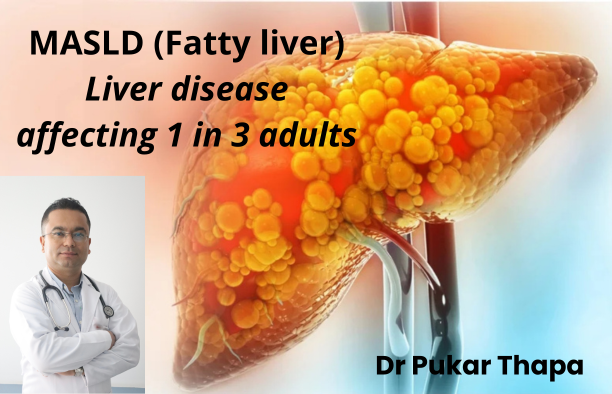
The Liver’s New Name: Why Doctors are Rethinking a Disease Affecting 1 in 3 Adults
The Hook: A Silent Global Shift
How can a disease affecting nearly 38% of the world's adults—roughly 4 out of every 10 people you know—remain largely invisible? For decades, the medical community referred to this silent accumulation of fat in the liver as "Nonalcoholic Fatty Liver Disease" (NAFLD). This old name defined the condition solely by what it was not, leaving the liver's role as the body’s metabolic powerhouse in the shadows.
Today, a major nomenclature shift to Metabolic Dysfunction–Associated Steatotic Liver Disease (MASLD) is finally pulling back the curtain. This is more than a re-branding; it is a recognition of the liver as a high-stakes chemical refinery that, when compromised, signals a systemic breakdown. The scale of this "silent" crisis is staggering: while many patients feel fine, the underlying incidence of hepatocellular carcinoma (liver cancer) stands at 1.25 per 1000 person-years among those with MASLD, a figure that highlights the quiet danger lurking within.
The "Positive" Redefinition: Moving Beyond the Stigma of Exclusion
For years, a diagnosis of fatty liver was a diagnosis of "exclusion." Doctors simply ruled out heavy drinking and left patients with a name—"nonalcoholic"—that focused on their habits rather than their biology. This approach often carried a subtle stigma and, worse, created a clinical blind spot. Under the old rules, a patient with clear metabolic struggles might not even "fit" the diagnosis if they consumed a moderate amount of alcohol.
The shift to MASLD provides a "positive" definition: it identifies the disease by what it is (metabolic dysfunction) rather than what the patient isn't doing. By focusing on "inclusionary" criteria—like high blood pressure, obesity, or insulin resistance—doctors can now validate the metabolic struggles patients actually face. This evolution ensures that liver health is no longer a separate, "othered" issue, but a core component of a patient's overall metabolic profile.
"There was further iteration of the names and definitions of NAFLD and NASH in 2023 to metabolic dysfunction–associated steatotic liver disease (MASLD) and metabolic dysfunction–associated steatohepatitis (MASH)."
It’s a Multisystem Crisis, Not Just a Liver Problem
The most dangerous misconception about MASLD is that the liver is the only organ at risk. In reality, the liver often acts as a warning light for the entire body. MASLD is a multisystem disease that increases the risk of chronic kidney disease, heart failure, and certain gastrointestinal cancers (like colorectal cancer) by approximately 1.5 times.
The heart, in particular, is in the crosshairs. While the baseline risk for cardiovascular events is 1.5 times higher in MASLD patients, that risk escalates dramatically to 2.5 times as liver disease and scarring (fibrosis) worsen. This is why hepatologists now emphasize a sobering reality:
"Cardiovascular disease is the leading cause of death in persons with MASLD."
The Staggering "Diabetes Connection"
If you have Type 2 Diabetes, the probability of having MASLD is an overwhelming 65%. Diabetes is the predominant metabolic factor that pushes the liver toward its more severe, inflammatory stage. This relationship is a dangerous two-way street; the presence of MASLD significantly increases the risk of metabolic collapse:
· New-onset diabetes risk: 2.2x higher for those with MASLD.
· Advanced disease risk: 3.4x higher risk of developing diabetes if advanced liver fibrosis is already present.
The Dawn of the Pharmacological Era: MASH and the New Frontier
We are entering a new era for patients with MASH—the "at-risk" stage of the disease where the "H" stands for hepatitis (inflammation and scarring). For forty years, the only prescription was "diet and exercise," but as of March 2024, the FDA has granted conditional approval to Resmetirom. This is the first-ever medication specifically for adults with noncirrhotic MASH and moderate-to-advanced scarring.
The current strategy involves a two-pronged pharmacological attack. Resmetirom acts as a "liver-directed" specialist, a thyroid hormone receptor beta–selective agonist that improves the organ's internal metabolism. Meanwhile, GLP-1 agonists like Semaglutide are showing immense promise by treating the "upstream" causes: weight loss and insulin resistance. Having these tools available fundamentally changes the prognosis for those who previously had no medical options.
The Muscle-Liver Mystery: Why Sarcopenia Matters
One of the most counter-intuitive discoveries in metabolic health is the link between the liver and muscle loss, known as sarcopenia. You don't have to be "obese" in the traditional sense to be at risk; "skinny" individuals with high levels of visceral fat can still develop MASLD. This often goes hand-in-hand with "myosteatosis"—the accumulation of fat within the muscle itself.
The connection is stark: patients with the inflammatory MASH stage are significantly more likely to suffer from sarcopenia than healthy controls (35% vs 8.7%). Doctors are now using tools like the SARC-F questionnaire to identify these patients early. Because simple calorie restriction can actually accelerate muscle loss and worsen metabolic health, resistance training has become a "cornerstone" of management. Strengthening the muscle is now recognized as a direct way to help heal the liver.
Conclusion: A Forward-Looking Summary
The transition from NAFLD to MASLD represents a turning point in modern medicine. We have moved from a hidden, stigmatized condition defined by exclusion to a manageable metabolic priority that connects the liver to the heart, kidneys, and muscles. Taking care of your liver is no longer just about what you avoid; it's about optimizing your entire metabolic engine.
With 38% of the global population potentially affected, is it time we started looking at liver health as a standard part of our annual metabolic check-up? Your liver is your refinery—and it’s time we started treating it like one.
Keywords:
MASLD, NAFLD, metabolic dysfunction associated steatotic liver disease, fatty liver disease, liver disease statistics, hepatocellular carcinoma, fatty liver treatment nepal, Dr. Pukar Thapa, hepatologist nepal, liver and digestive disease center